When reading a crochet pattern, you may often see “chain (ch) 1 and turn your work” or something similar at the end of every row. This is what is referred to as a turning chain. The turning chain is usually not counted as a stitch when totaling up the stitch count for a row.
What is a turning chain, and why is it important in crochet?
Well, say I had a project that was only in double crochets (dc). Here I have 1 row of 6 double crochets:
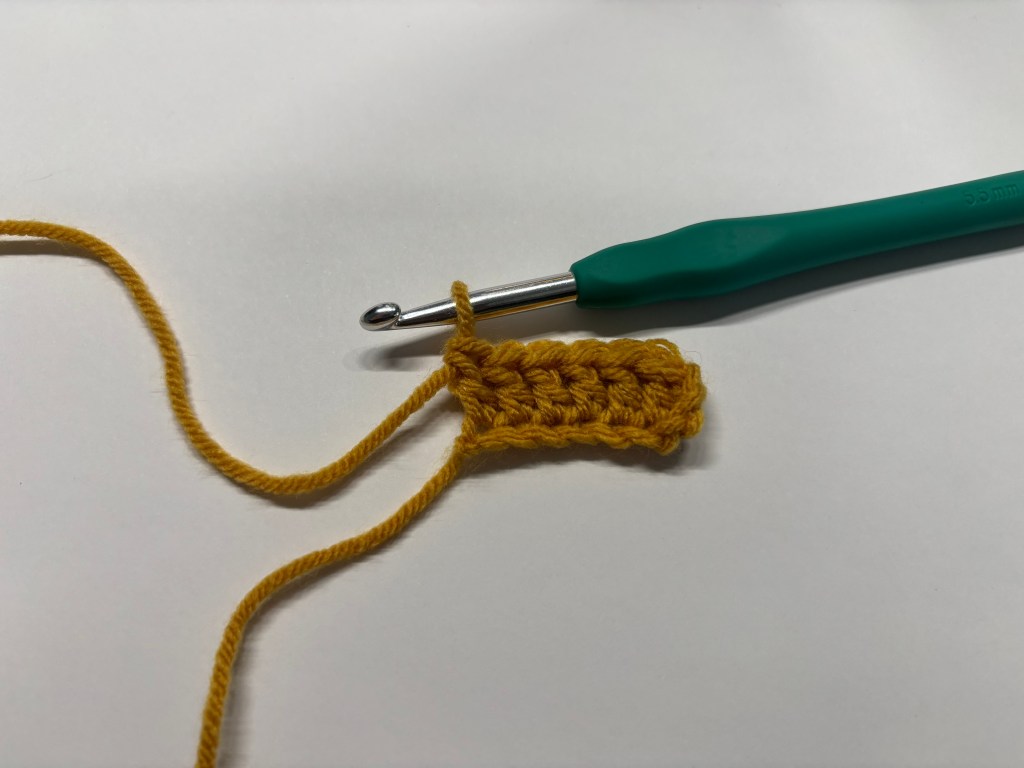
Since we are at the end of the row, this is where the pattern would say “ch 3 and turn” before starting the next row, aka the turning chain.
Here is what is looks like when I chain 3, flip my work so that it’s facing the other way, and then double crochet 6:

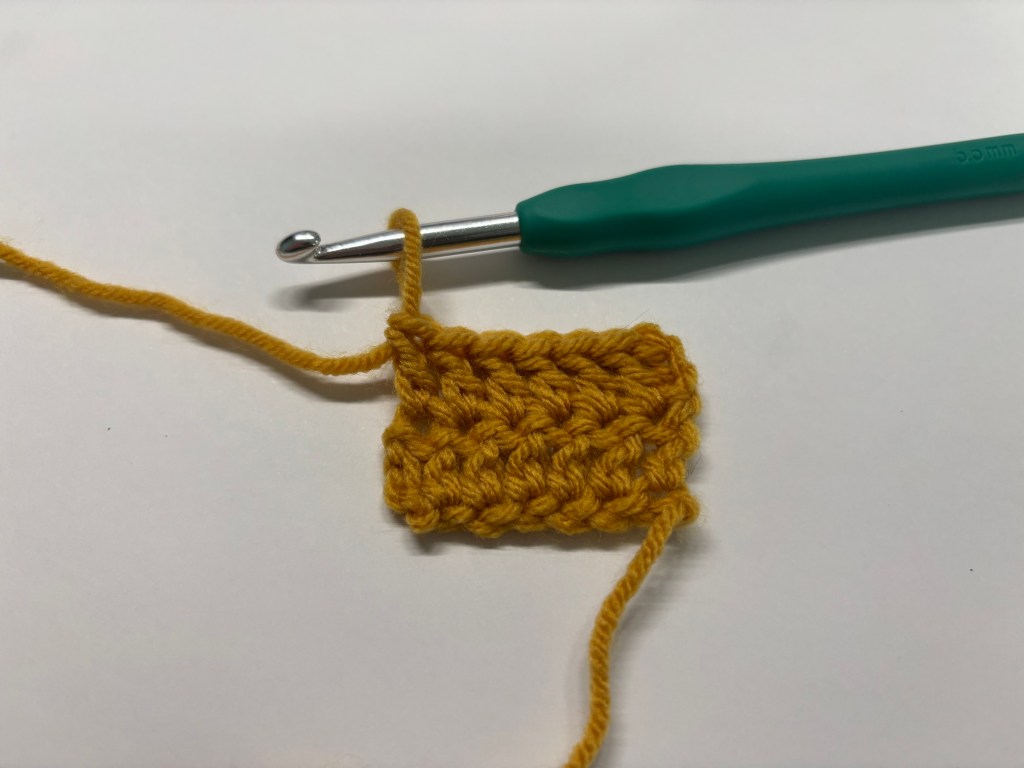
The corners are nice and sharp and it looks like a rectangle!
What if I didn’t chain 3 first, and just turned and doubled crocheted 6?

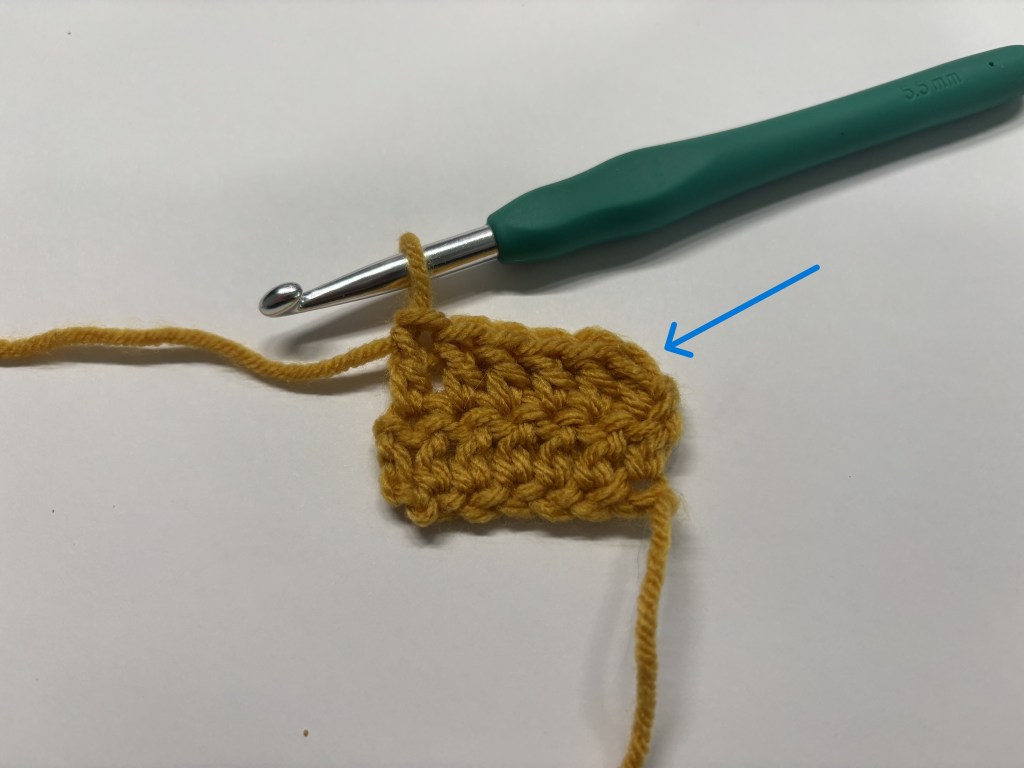
See how the first double crochet I did in the upper right is lower than the other dcs? Since I didn’t add 3 chains first, the 1st double crochet is starting at a lower point and will drag the corner down.
Turning chains are important, especially with taller stitches like double crochets or treble crochets, because they allow you to add height to the beginning of a row before starting the first stitch. This creates cleaner corners and a better looking project.
Turning in granny squares
The turning aspect of turning chains are also important when making granny squares.
If you don’t turn your work after each row when crocheting a granny square, you can often end up with a twisted looking square. This is also known as “granny lean“.
Here I have crocheted the granny square on the left by turning/flipping the square over after every round. For the granny square on the right, I did not turn after every row.

It may not seem super noticeable since these squares are relatively small. Look what happens to the square on the right (no turning) when I add two more rows though:

The bigger your square gets, the more you will notice this leaning or twisting of the rows. Since you are only crocheting counterclockwise on every row, your stitches will also lean this way and pull the rows in this direction. Turning after every row will counteract this and keep your square straight!
 Lunar Noonar Loops
Leave a comment